Shopping Tourism: Is Your Brand Ready for the New Asian Traveler?
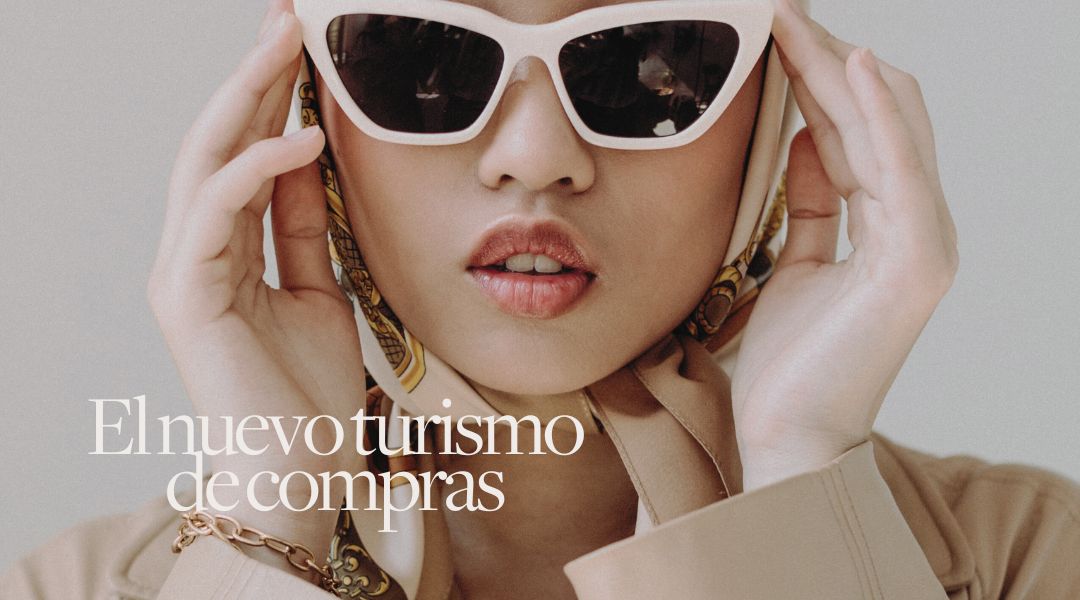
Every Chinese tourist who enters your store represents a potential economic treasure. The figures speak for themselves: they represent up to 30% of the global luxury market in international travel. But behind this percentage lies a silent revolution that is redefining the rules of global commerce.
This group, known for its high purchasing power, looks for more than just exclusive products; they seek high-quality shopping experiences, cultural understanding, and a connection with brands that reflect their values and lifestyle. But how can you guarantee that your communication is relevant, consistent, and culturally appropriate? The answer lies in a strategic and omni-channel adaptation that translates words and localizes emotions.
Chinese luxury tourism: the new challenge for global brands
Shopping tourism is a key driver for the luxury sector. According to the World Tourism Organization (UNWTO), this type of tourism boosts the local economy and generates a significant impact on international luxury markets. In this context, Chinese consumers stand out as a highly important segment, recognized for their high spending on shopping during their trips and their interest in brands that offer communication adapted to their culture and language.
More than just a simple data point, this is proof of the new dynamics of global consumption.
The Chinese client values exclusivity, personalized attention, and communication adapted to their language and culture. Simply adding bilingual signage and well-trained Chinese-speaking staff can make all the difference for this demographic. In cities like Madrid, for example, major centers like El Corte Inglés in Nuevos Ministerios have already implemented the Chinese language in the signage on the ground floor, where luxury brands are located. Every sign is an invitation to an experience that goes beyond a simple purchase.
Another great example is on the other side of the world, in Sydney. Its shopping districts incorporate bilingual signage, creating true cultural bridges. It is not just about translating, but about interpreting—generating an experience that makes the Chinese tourist feel at home, thousands of kilometers from their origin.
Translation or cultural localization?
Localization is not translation. It is closer to adaptation or transcreation. This is the first lesson for any brand wanting to capture the attention of the Chinese market. A misplaced character can transform an elegant message into an absolute disaster. Communication in Chinese must be seen as an art, not an exact science.
In this sense, companies need to understand several points:
Meanings in Chinese are highly contextual. A word can have up to 10 different meanings depending on its linguistic environment.
Cultural weight is fundamental. Each character carries a history, a tradition, and a way of understanding the world. It is about interpreting that cultural universe.
Numbers have their own meaning. In Chinese culture, some numbers like 8 are considered lucky, while 4 is associated with death. This directly affects marketing and communication strategies.
Non-verbal communication is crucial. Tones, gestures, and the spaces between words are as important as the text itself.
Elegance has a specific code. What may seem sophisticated in the West might be perceived as ostentatious or even rude in China.
Brands that do not look after these vital details run the risk of failing to connect with the audience or even projecting a poor image.
Why choose a specialized agency
Traditional translation agencies are reduced to mere spectators in this reality, unable to address the challenge of a language that is much more than a set of characters. They lack the necessary knowledge to understand that every message aimed at the Chinese luxury market is an experience.
Artificial intelligence, as sophisticated as it may seem, cannot capture the emotional subtlety that truly connects with such a complex luxury consumer. An algorithm can translate words, but it will never be able to convey the essence of a message.
What is required are native translators or professionals deeply immersed in this culture—specialists capable of transforming every piece of content into a full experience. Professionals who understand the language, the latest fashion trends, Chinese consumer behavior, and above LDH, the ability to turn every communication into a bridge that connects cultures and expectations.
A high-level localization service creates narratives, builds experiences, and transcends language barriers to turn every message into an invitation to buy—and this is something that cannot be left in the hands of an AI.
The impact of strategic preparation
Strategic preparation for the Chinese luxury market is an investment in any brand's global future. Those who anticipate and understand the needs of this segment will see results in terms of conversion rates, global positioning, and a far superior shopping experience, ensuring that every customer feels understood and truly celebrated.
Global positioning today has become the recognition of a brand's ability to speak with different cultures. One could say that cultural adaptation is the universal language of modern luxury. That is why offering a culturally adapted service means speaking your Chinese customers' language in its deepest sense, gaining the trust of one of the most important consumer groups in the luxury market.
Brands that understand this new reality will lead the luxury market and redefine the rules of global commerce.
El primer paso para potenciar tu presencia online
Cuéntanos qué necesita tu negocio. Ya sea que busques dominar las búsquedas con IA, optimizar la conversión de tu ecommerce o poner orden a tu estrategia digital, estamos aquí para ayudarte.
Financiado por la Unión Europea con el programa Kit Digital por los fondos Next Generation (EU) del mecanismo de recuperación y resiliencia